Independent service. Clear information.
Sub-Zero and Wolf appliance repair requests in Chicago and surrounding communities. Understand our independent status and how to plan a service visit.
Call (224) 347-1756 ↗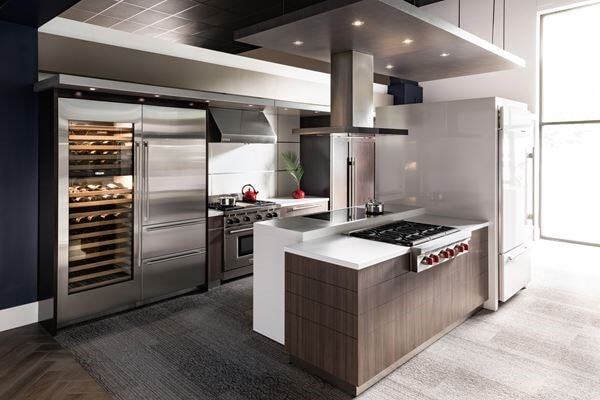
An independent repair option
This site represents an independent appliance repair service. We are not Sub-Zero Group, Inc., a manufacturer-owned business or Factory Certified Service. Sub-Zero and Wolf trademarks identify the appliances discussed here; they do not imply sponsorship or endorsement.
A useful first conversation
Start with your location, appliance model and the problem you are seeing. Ask about diagnostic charges, current appointment availability and how a repair proposal is approved. Any quoted repair scope, part choice or warranty terms should be confirmed for your specific job.
If manufacturer warranty may apply
Check your documents and contact the manufacturer before arranging independent paid work. Use the official Sub-Zero, Wolf & Cove service locator to find the manufacturer’s service channel.
Find the information you need
What independent service means on this website
Independence describes the relationship between this service and the appliance manufacturers. It means this website does not claim to be owned, sponsored or endorsed by Sub-Zero Group, Inc., and it does not claim Factory Certified Service status. The Sub-Zero and Wolf names are used to identify the equipment discussed and the repair requests the site is intended to help organize.
That distinction matters when you choose a service route. A possible manufacturer-warranty issue should be checked with the manufacturer before independent paid work is authorized. Use the official service locator and your warranty documents to establish the appropriate channel for your appliance. Do not infer manufacturer authorization from a company’s name, a product photograph or a page about a particular brand.
This website focuses on useful service information rather than unverified credentials or numerical claims. It does not publish invented customer reviews, branch addresses, completed-job counts or guaranteed response times. The practical questions are the same ones a homeowner should ask directly: what does the diagnostic visit include, what work is proposed, which parts apply to this model and how will approval and follow-up be handled?
How the information is organized
The main appliance pages explain the kinds of concerns to describe and the process for preparing a repair request. Owner guides examine individual symptoms in more detail. The service-area directory helps visitors locate their community and confirm coverage by ZIP code. The local pages combine selected appliance topics with hypothetical planning examples; they do not claim that those examples are completed repairs or that particular failures occur more often in those towns.
Photographs illustrate the equipment categories. They are not presented as evidence of a specific completed job, employee or factory affiliation. The contact page gives the service telephone number and the information useful for a first conversation. Appointment availability, diagnostic charges and any repair terms should be confirmed directly for the actual request.
Coordinate the people, property and appliance access
Confirm who will be present and able to discuss the appliance and approve work. If you are arranging service for a relative, tenant or another household member, make sure the contact details and approval process are clear. Do not assume that the person opening the door has the same information or authority as the person who made the initial call.
For a managed building, ask about contractor sign-in, service-elevator booking, parking and any documents required by management. Discuss those requirements before selecting a time. A building’s rules should be verified directly with its management; this website cannot know the access policy for a particular property.
For a home, describe stairs, gates, a long or restricted driveway and tight kitchen access where relevant. Share the exact location privately when arranging the appointment rather than posting access codes or personal details in a public place. Clear ordinary directions are usually more useful than an assumption that the technician will discover every restriction on arrival.
Clear loose items from the path and nearby work area. Keep pets and children away during service and allow cooking appliances to cool. Leave built-in equipment installed. If another trade recently altered cabinetry, plumbing or electrical work around the appliance, explain that history so the service provider can plan the appropriate assessment.
Understand diagnosis, approval and completion as separate steps
A diagnostic visit is intended to establish the problem and possible next steps. It does not automatically mean that every required part is already available or that the repair will be completed during the same visit. Ask what the diagnostic charge covers and how a proposed repair will be presented before you choose an appointment.
When a recommendation is made, ask how it relates to the original complaint. Clarify the part or task involved, labor, access requirements and any expected follow-up visit. If more than one issue is found, ask which work is necessary for the current problem and which is optional or separate. This helps keep the approval decision concrete.
Confirm how additional findings or changes in scope will be handled. A clear approval process is more useful than an open-ended instruction to do whatever seems necessary. Ask about applicable warranty terms for the proposed work and retain them with the invoice. Do not assume that independent service is covered by a manufacturer warranty.
If the appliance may qualify for manufacturer-warranty work, contact the manufacturer or use its official service locator before authorizing independent paid service. Keep the choice of service route separate from the urgency of an ordinary appointment. For an immediate hazard, obtain appropriate emergency assistance instead of waiting for a routine repair assessment.
Make the follow-up easier for everyone involved
At the end of a visit, ask what was found, what work was completed and what remains unresolved or dependent on parts. Request a clear explanation of any next step. If normal operating observations are needed after service, ask what to watch and how to report a concern. Avoid assuming that every appliance returns to its final condition immediately without model-specific guidance.
Keep a simple record containing the date, model, reported symptom, invoice and applicable terms. Add any instructions the service provider gave for ordinary use or follow-up. This information helps if the concern recurs or another household member needs to discuss the appliance later.
If the symptom changes before a return visit, report the new observation. A different display message, new leak location or additional affected compartment may matter. Describe the change without deciding that it proves the original assessment was wrong or that a different part must now be replaced. The objective is an accurate record for the next decision.
For recurring concerns, compare the same conditions where possible: the same oven mode, compartment or visible area. Do not repeatedly create a fault to demonstrate it. A concise timeline and safe observations give a better basis for follow-up than a large number of speculative tests. Keep communication focused on the original complaint, the agreed scope and the current behavior.
Recognize the limits of preventive care
Maintenance can be part of responsible ownership, but it does not guarantee a particular lifespan or eliminate every possible breakdown. A clean accessible area does not establish that controls, sensors or refrigeration components are functioning correctly. Likewise, an appliance that currently appears to work does not make it appropriate to ignore the manufacturer’s care instructions.
If a symptom persists after cleaning, return to the symptom history. Note what was cleaned, when the task was completed and whether anything changed. Do not repeat the same task indefinitely in place of diagnosis. Ask the service provider what an assessment would involve and what information is useful before the visit.
Avoid replacing parts solely as a speculative maintenance measure unless there is a clear, model-specific reason and you understand the proposal. Request an explanation of the expected benefit, cost and alternatives. A recommendation should be evaluated on the facts of your appliance rather than a general claim about what every owner should buy.
For a possible manufacturer-warranty issue, confirm the appropriate service route first. Keep care records and repair invoices together, but do not assume that independent maintenance creates or extends manufacturer coverage. The practical goal is a clear history, suitable routine care and timely assessment when performance changes—not a guarantee that can be inferred from a cleaning checklist.
