A thoughtful routine for your appliances.
Plan Sub-Zero condenser care and accessible appliance maintenance with model-specific instructions. Independent service across Chicago and nearby suburbs.
Call (224) 347-1756 ↗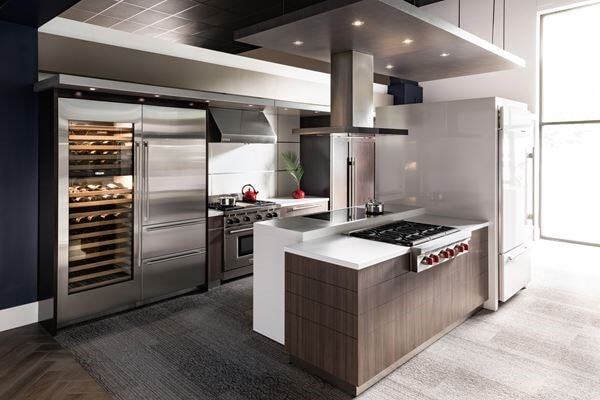
Maintenance starts with the manual
A built-in refrigerator, wine unit and Wolf cooking appliance have different care requirements. Identify the exact model before planning cleaning or access. A routine visit can also be a useful time to discuss door closure, ventilation access and recurring observations.
A practical care record
- Keep the model and serial number in one place
- Record cleaning and service dates
- Follow the manufacturer’s instructions for accessible seals and surfaces
- Keep ventilation openings unobstructed
- Report persistent temperature, ignition or control problems as repair concerns
Know the limits of routine cleaning
Maintenance is not a guarantee against a future breakdown, and it cannot establish the cause of every performance problem. If an appliance is already warming, leaking or showing an alert, explain that symptom before booking care. Ask which tasks are included and how any repair recommendation will be approved.
Plan your next step
Sub-Zero condenser care: a practical checklist
Maintenance instructions depend on your model. Use the correct manual, keep access safe and treat persistent cooling problems as a separate repair issue.
How to prepare for an appliance service visit
A few clear details help organize the right visit: model information, symptom history, access arrangements and the questions you want answered.
Set a useful scope for a care appointment
Before arranging maintenance, decide which model-specific tasks you want to discuss and identify any performance concerns separately. Cleaning, inspecting an accessible surface and diagnosing a recurring alert are not the same scope of work. The detailed sections below help you prepare records, understand access limits and ask what is included. They are not a replacement for the manufacturer’s instructions or a promise that routine care will prevent every failure. Keep the date and description of completed work with your appliance information. When performance changes, that record can support a focused diagnostic conversation without assuming that maintenance proves or rules out a particular fault.
Start with a model-specific maintenance plan
A maintenance plan should begin with the exact appliance model and its owner instructions. A refrigerator, wine-storage unit and cooking appliance do not share one universal cleaning procedure. Even within the same brand, access arrangements and user-serviceable areas can differ. Keep the model information and the relevant manual together so you do not have to identify the appliance again each time care is due.
Record the tasks already performed and the date, rather than simply writing “serviced.” Condenser cleaning, accessible surface cleaning and a repair assessment are different activities. A short record helps you understand what has actually been done and what still needs attention. It can also prevent a later service request from assuming that an unperformed task was included.
Use the manufacturer’s guidance as the starting point for intervals and methods. Household conditions, including dust and pets, may be worth discussing with a service professional when planning future care. Do not invent an aggressive schedule based only on an advertisement, and do not assume that an appliance is maintenance-free because it is built into cabinetry.
If a performance problem is already present, lead with that symptom. A warm compartment, repeated alert or ignition problem should not be hidden inside a routine cleaning request. The appointment may need a diagnostic scope, and cleaning alone should not be promised as the solution before the cause has been assessed.
Keep access, power and cleaning methods within the manual
Read the complete care procedure before opening an access area. Follow the manufacturer’s instructions for power isolation and the intended method of cleaning. If the correct access point is unclear, stop and ask for professional help. Guessing from a photograph of another model is not a safe substitute for the right instructions.
Do not bend condenser fins, apply improvised chemicals or reach beyond the designated owner-accessible area. Electrical covers and sealed refrigeration components should remain in place. A cleaning task should not become an exploration of wiring or tubing. If debris is beyond what the approved method can reach, describe that limitation rather than forcing a tool deeper.
For a built-in installation, leave the appliance in its cabinet unless the model’s instructions explicitly describe an appropriate owner task that requires otherwise. Cabinet panels, connections and securing arrangements can make movement more involved than it appears. Tell the service provider about restricted access so the work can be planned correctly.
Keep cleaning products and tools appropriate to the surface or task. Care for a door gasket, stainless surface and cooking component may call for different methods. Finish by recording what was done and any concern noticed during normal access. The record should not claim an inspection of components you did not actually inspect.
Use maintenance visits to ask better ownership questions
A planned care visit can be a useful time to discuss how the appliance is installed and used. Ask whether ventilation access is being obstructed by stored items, whether accessible seals show visible damage and whether the maintenance record is adequate. Keep the discussion tied to observations and the model’s instructions rather than requesting a promise that the appliance will never fail.
List any recurring concern separately. For example, occasional door alarms, an unusual sound or a change in ice production should each be described with timing and circumstances. Ask whether those concerns require a diagnostic assessment beyond the maintenance tasks you booked. This avoids confusion about what the visit is intended to accomplish.
Clarify exactly which tasks are included and which are optional. If additional work is recommended, ask what finding supports it and whether it addresses a current problem or future care. Approve a clear scope instead of an undefined package. Confirm charges and any applicable terms before work begins.
Keep a practical record afterward. The date, model, completed tasks and any recommended follow-up are usually more useful than a folder of generic maintenance advertisements. If the appliance later develops a problem, this record provides context without implying that routine care proves or rules out a particular failure.
Recognize the limits of preventive care
Maintenance can be part of responsible ownership, but it does not guarantee a particular lifespan or eliminate every possible breakdown. A clean accessible area does not establish that controls, sensors or refrigeration components are functioning correctly. Likewise, an appliance that currently appears to work does not make it appropriate to ignore the manufacturer’s care instructions.
If a symptom persists after cleaning, return to the symptom history. Note what was cleaned, when the task was completed and whether anything changed. Do not repeat the same task indefinitely in place of diagnosis. Ask the service provider what an assessment would involve and what information is useful before the visit.
Avoid replacing parts solely as a speculative maintenance measure unless there is a clear, model-specific reason and you understand the proposal. Request an explanation of the expected benefit, cost and alternatives. A recommendation should be evaluated on the facts of your appliance rather than a general claim about what every owner should buy.
For a possible manufacturer-warranty issue, confirm the appropriate service route first. Keep care records and repair invoices together, but do not assume that independent maintenance creates or extends manufacturer coverage. The practical goal is a clear history, suitable routine care and timely assessment when performance changes—not a guarantee that can be inferred from a cleaning checklist.
Questions owners often ask
Will condenser cleaning fix every warm refrigerator?
No. Maintenance and diagnosis serve different purposes. If cooling is already affected, explain the symptom before booking and record any cleaning already performed. Ask whether the visit needs a diagnostic scope. A clean accessible area does not establish that every component is operating normally or guarantee that the original temperature concern has been corrected.
Can I use instructions for a similar model?
Use the owner’s instructions for the exact appliance. Access, controls and intended cleaning methods can differ between models that look similar. If identification or access is uncertain, ask for help rather than improvising. Keep electrical covers and sealed components in place, and do not expand a routine care task into internal troubleshooting.
What belongs in a maintenance record?
Keep the date, model, completed tasks and any recommendation for follow-up. Distinguish cleaning from repair and note which concern prompted a service visit. A concise record is enough; the objective is to know what was actually done. Do not label a limited cleaning task as a complete inspection of components that were never evaluated.
