Sub-Zero door not closing: an owner observation guide
Check loose obstructions and describe door behavior without adjusting hinges or moving a built-in refrigerator.
Call (224) 347-1756 ↗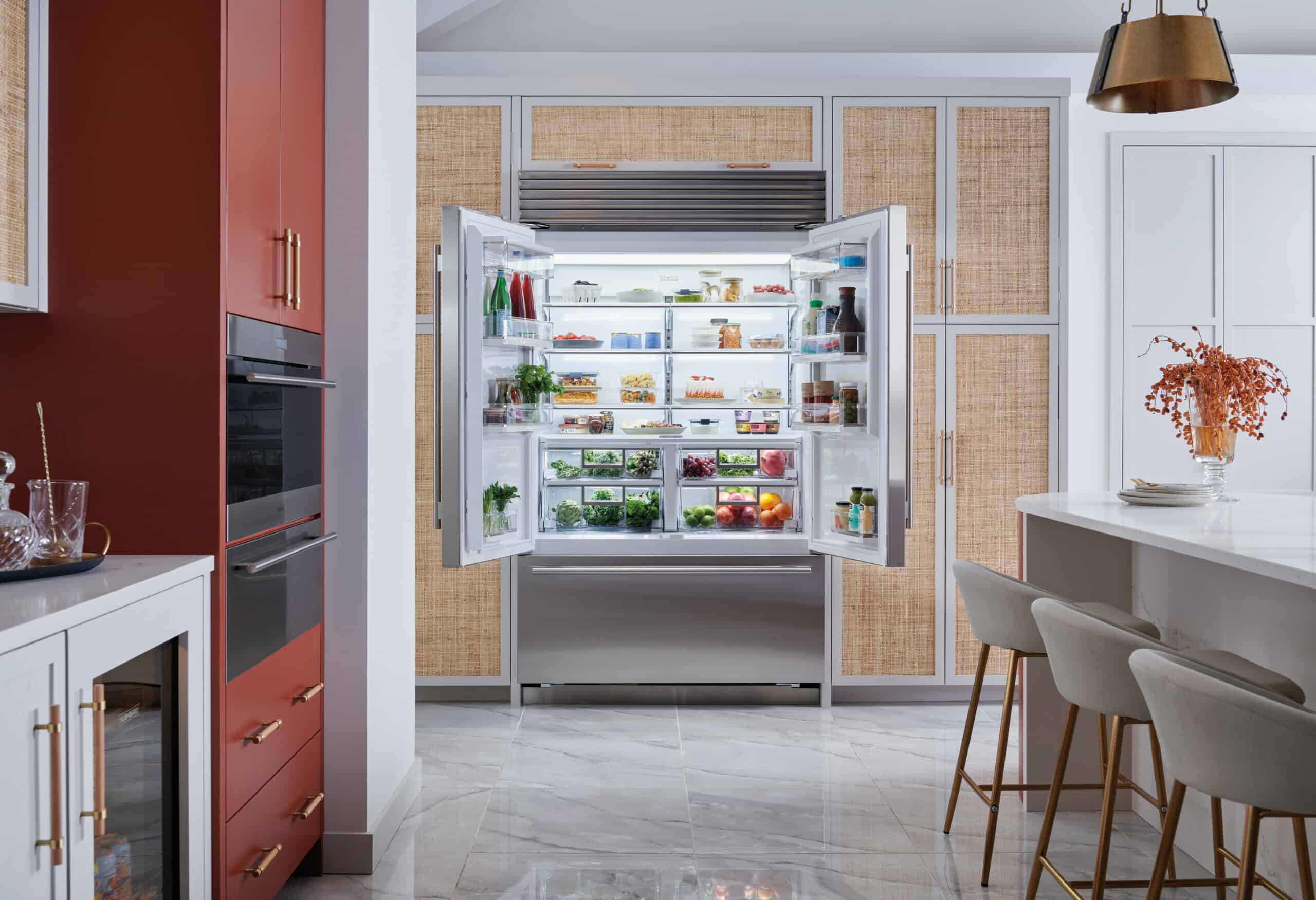
OWNER JOURNAL · REFRIGERATION & WINE · INDEPENDENT SERVICE GUIDANCE
Describe what “not closing” actually means
A door that meets a package, a drawer that stops short and a door that appears closed but triggers an alarm are different complaints. Begin with the motion you can observe during ordinary use. Does the door meet resistance at the same point? Is the problem limited to one drawer? Did the symptom begin after shelving was rearranged or cabinetry was worked on? These details help frame the request without deciding that a gasket or hinge has failed.
Look for loose items that extend beyond their normal storage area. A bottle in a door bin or packaging near a drawer can interfere with closure. Move only ordinary contents that are safe to handle. Do not lean on the door, use extra force or remove structural hardware to make the symptom disappear.
Separate the door, panel and surrounding cabinet
Panel-ready appliances involve several visible surfaces, and an apparent gap does not necessarily identify which one is out of position. Take a photograph from normal standing height with the door resting in its usual closed position. Add a second view showing the surrounding cabinetry if it helps explain contact or alignment. Do not remove trim or pull the appliance forward for the picture.
Record any recent installation, floor work or panel adjustment as history, not proof of causation. If the door closes differently when nearby drawers are open, describe that observation. A technician can decide whether the concern belongs to appliance service, installation adjustment or both. Ask who will handle any cabinetry work before approving a proposed solution.
Connect closure with the actual appliance complaint
Explain whether the door issue accompanies frost, moisture, a temperature change or only a sound. These observations may be related, but combining them into “replace the seal” skips the diagnostic step. Also record whether the alarm is constant or intermittent and which compartment it identifies.
Until the visit, keep normal access brief and prevent loose items from obstructing closure. Do not tape a switch, defeat an alarm or force an iced drawer. After work is completed, ask the technician to demonstrate the expected door action and explain what to watch for. Save a clear description of the original symptom so a recurring problem can be compared with the same starting point.
Your four-point preparation checklist
- Identify the exact door or drawer.
- Check loose packages and normal shelf placement.
- Photograph visible alignment without removing trim.
- Mention alarms, frost and temperature changes separately.
Use this checklist to organize observations from ordinary use. Mark a detail as unknown when it has not been confirmed; an empty field is better than a guessed model, time or component. Keep photographs and notes with the same appliance record so a second household member can explain the concern consistently.
Know which door observations are useful
A door that looks closed from across the kitchen may still have a closure problem, but appearance alone is not a diagnosis. Describe whether it resists movement, springs back, triggers an alarm or shows a visible gap. Mention any recent adjustment to custom panels or nearby cabinetry. Those details help the service provider understand the installation without asking you to alter it.
Look only at accessible gasket surfaces. Note visible debris, a tear or a section that appears out of position. Do not pull the gasket off or adjust hinges to see whether the frost improves. A change made without model-specific instructions may introduce an additional problem and make the original condition harder to assess.
Explain which door or drawer is involved if the kitchen has several units. A freezer column, combination appliance and undercounter drawer may have different arrangements even when their panels match. Model-label information helps avoid mixing observations from neighboring appliances.
Keep the normal use history in mind. A door left open during unloading and a persistent closure problem should both be reported, but they are not the same event. A service request should distinguish an isolated occurrence from a condition that keeps returning. That distinction helps determine what needs to be checked after any obvious obstruction has been removed.
Choose a safe response to visible ice
Sharp tools and concentrated heat should not be used to remove freezer ice. A knife or ice pick can damage a liner or hidden component, while a heat gun or hair dryer can harm materials and create an electrical hazard. Do not treat an online shortcut as an appropriate instruction for a built-in appliance.
If the owner’s manual provides a procedure relevant to the exact model, read it completely before deciding whether it applies. Consider what will happen to stored contents and any meltwater. If the procedure is unclear, if access is restricted or if a drawer is immobilized, arrange professional assistance rather than improvising.
Keep people who use the kitchen informed. A stuck drawer should not be forced by someone who has not heard about the problem. A visible note or a direct conversation can prevent an avoidable second issue while service is being arranged. Do not recreate a frost condition simply to show it during the visit; document what you can see safely instead.
If temperature is also changing, treat that as part of the service request and plan suitable storage for affected contents. Removing visible ice, even when a model-specific procedure allows it, does not prove that the cause of recurring frost has been corrected. Report recurrence with dates and photos so the next assessment can compare the pattern.
Make the follow-up easier for everyone involved
At the end of a visit, ask what was found, what work was completed and what remains unresolved or dependent on parts. Request a clear explanation of any next step. If normal operating observations are needed after service, ask what to watch and how to report a concern. Avoid assuming that every appliance returns to its final condition immediately without model-specific guidance.
Keep a simple record containing the date, model, reported symptom, invoice and applicable terms. Add any instructions the service provider gave for ordinary use or follow-up. This information helps if the concern recurs or another household member needs to discuss the appliance later.
If the symptom changes before a return visit, report the new observation. A different display message, new leak location or additional affected compartment may matter. Describe the change without deciding that it proves the original assessment was wrong or that a different part must now be replaced. The objective is an accurate record for the next decision.
For recurring concerns, compare the same conditions where possible: the same oven mode, compartment or visible area. Do not repeatedly create a fault to demonstrate it. A concise timeline and safe observations give a better basis for follow-up than a large number of speculative tests. Keep communication focused on the original complaint, the agreed scope and the current behavior.
Questions to settle before the visit
Can I chip the ice away to close the drawer?
Avoid sharp tools, force and concentrated heat. They can damage materials or components and may make the original issue harder to assess. Follow the exact model’s owner instructions if a relevant procedure is provided, and seek professional help when access is unclear. Report that the drawer is stuck rather than forcing it to demonstrate the symptom.
Is a damaged gasket always the cause?
Visible gasket damage is useful information, but it does not by itself explain every frost or temperature concern. Note door behavior, the frost location and the time history. Ask how the assessment connects the proposed work to those observations. A diagnosis should consider the appliance and installation rather than selecting the most visible worn part automatically.
What if the frost goes away and then returns?
Record both dates and any intervening change, such as normal-use adjustments, a model-approved procedure or service. Photograph the recurring pattern only through safe access. Recurrence is useful context for the next assessment, but it is not proof of one particular failure. Keep the history clear and avoid repeating improvised removal methods.
A concise message for your service conversation
Begin with the appliance model and the function or care task described in this article. State what you observed, when it began and whether it is changing. Then add only the relevant history: a control change, loading event, cleaning, interruption or previous visit. Avoid selecting a replacement part before the diagnosis. If several people use the kitchen, combine their notes into a single timeline and keep uncertain details labeled. Confirm the appointment scope, availability and approval process directly with the provider before relying on a repair plan.
Read the next relevant resource
Detailed symptom guide · Related service information · Sub-Zero condensation: describe moisture before guessing a leak · Browse the complete journal
Model-specific reference: Sub-Zero, Wolf, and Cove owner support. Follow the current instructions for your exact model. This independent article is not manufacturer authorization or a substitute for an onsite diagnosis.
