Wolf ventilation filters: build a model-specific care plan
Identify the hood and filter type before cleaning, and keep airflow complaints separate from reminder resets.
Call (224) 347-1756 ↗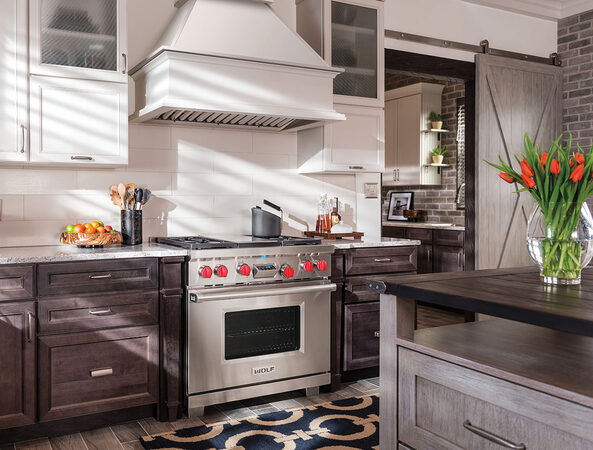
OWNER JOURNAL · COOKING & VENTILATION · INDEPENDENT SERVICE GUIDANCE
Identify the hood separately from the range
The ventilation hood has its own model and care requirements. A Wolf range below it does not tell you which filters the hood uses. Record the hood model and whether the installation exhausts outdoors or uses an approved recirculating arrangement, if known. If that information is uncertain, describe what you can see and consult the relevant documentation.
Wolf's filter reference distinguishes models and filter types, with separate cleaning resources. Do not assume a removable grease filter and a recirculating filter receive the same treatment. Use the procedure for the actual component before placing anything in a dishwasher or applying a cleaning product.
Plan safe access before removing a filter
Let cooking surfaces cool and follow the manual's power and access instructions. Avoid standing on the range or reaching over hot cookware. If the filter cannot be reached safely, arrange suitable assistance. Do not loosen hood mounting parts or open electrical enclosures to perform routine cleaning.
Set aside a clean place for removable parts and record their orientation if the manual permits removal. Follow the guide for cleaning, drying and reinstalling the specified filters. A reminder reset belongs after the appropriate work, not in place of it. Keep the date and procedure with the hood's appliance record.
Describe performance concerns independently
If smoke capture, sound or fan behavior has changed, write that complaint separately from routine filter maintenance. Record the selected speed and the cooking activity during which you noticed the problem. Do not deliberately create smoke to demonstrate poor capture or assume that cleaning proves the entire ventilation system is operating correctly.
Ask the provider which part of the installation needs assessment and whether the concern involves the hood, ducting or another condition. For unusual gas odors or other immediate hazards, follow the appropriate emergency response rather than relying on the hood. A routine maintenance appointment is not an emergency ventilation assessment.
Your four-point preparation checklist
- Record the hood model independently of the range.
- Identify the filter type before choosing a cleaning method.
- Use safe access with cool cooking surfaces.
- Log airflow or fan concerns separately from filter reminders.
Use this checklist to organize observations from ordinary use. Mark a detail as unknown when it has not been confirmed; an empty field is better than a guessed model, time or component. Keep photographs and notes with the same appliance record so a second household member can explain the concern consistently.
Use maintenance visits to ask better ownership questions
A planned care visit can be a useful time to discuss how the appliance is installed and used. Ask whether ventilation access is being obstructed by stored items, whether accessible seals show visible damage and whether the maintenance record is adequate. Keep the discussion tied to observations and the model’s instructions rather than requesting a promise that the appliance will never fail.
List any recurring concern separately. For example, occasional door alarms, an unusual sound or a change in ice production should each be described with timing and circumstances. Ask whether those concerns require a diagnostic assessment beyond the maintenance tasks you booked. This avoids confusion about what the visit is intended to accomplish.
Clarify exactly which tasks are included and which are optional. If additional work is recommended, ask what finding supports it and whether it addresses a current problem or future care. Approve a clear scope instead of an undefined package. Confirm charges and any applicable terms before work begins.
Keep a practical record afterward. The date, model, completed tasks and any recommended follow-up are usually more useful than a folder of generic maintenance advertisements. If the appliance later develops a problem, this record provides context without implying that routine care proves or rules out a particular failure.
Recognize the limits of preventive care
Maintenance can be part of responsible ownership, but it does not guarantee a particular lifespan or eliminate every possible breakdown. A clean accessible area does not establish that controls, sensors or refrigeration components are functioning correctly. Likewise, an appliance that currently appears to work does not make it appropriate to ignore the manufacturer’s care instructions.
If a symptom persists after cleaning, return to the symptom history. Note what was cleaned, when the task was completed and whether anything changed. Do not repeat the same task indefinitely in place of diagnosis. Ask the service provider what an assessment would involve and what information is useful before the visit.
Avoid replacing parts solely as a speculative maintenance measure unless there is a clear, model-specific reason and you understand the proposal. Request an explanation of the expected benefit, cost and alternatives. A recommendation should be evaluated on the facts of your appliance rather than a general claim about what every owner should buy.
For a possible manufacturer-warranty issue, confirm the appropriate service route first. Keep care records and repair invoices together, but do not assume that independent maintenance creates or extends manufacturer coverage. The practical goal is a clear history, suitable routine care and timely assessment when performance changes—not a guarantee that can be inferred from a cleaning checklist.
Build a concise record before choosing an appointment
Start with the appliance brand, exact model and serial number if available. Use the owner’s manual to locate the label through normal safe access. A photo of the label can be easier than reading a long sequence of characters over the phone. If the label cannot be reached, say so and share purchase or prior service information that may help identify the unit.
Write one sentence describing the main concern, followed by when it began and whether it is constant or intermittent. Add the affected compartment, oven cavity, burner or wine-storage zone. This makes the request specific without requiring technical expertise. Keep separate appliances and separate symptoms on separate lines so the intended scope is clear.
Record a display message exactly when it can be viewed safely. A photo of visible water, frost or an accessible door gap may also help. Do not remove panels, move a built-in appliance or deliberately repeat an unsafe event to obtain evidence. A written description is enough when a photograph would require risky access.
Include relevant events such as a power interruption, cleaning, filter change, installation work or previous repair. Present them as a timeline rather than as proven causes. The service provider can then ask focused questions and explain what an assessment would involve. Accurate uncertainty is more useful than a confident component diagnosis made without inspection.
Questions to settle before the visit
Will condenser cleaning fix every warm refrigerator?
No. Maintenance and diagnosis serve different purposes. If cooling is already affected, explain the symptom before booking and record any cleaning already performed. Ask whether the visit needs a diagnostic scope. A clean accessible area does not establish that every component is operating normally or guarantee that the original temperature concern has been corrected.
Can I use instructions for a similar model?
Use the owner’s instructions for the exact appliance. Access, controls and intended cleaning methods can differ between models that look similar. If identification or access is uncertain, ask for help rather than improvising. Keep electrical covers and sealed components in place, and do not expand a routine care task into internal troubleshooting.
What belongs in a maintenance record?
Keep the date, model, completed tasks and any recommendation for follow-up. Distinguish cleaning from repair and note which concern prompted a service visit. A concise record is enough; the objective is to know what was actually done. Do not label a limited cleaning task as a complete inspection of components that were never evaluated.
A concise message for your service conversation
Begin with the appliance model and the function or care task described in this article. State what you observed, when it began and whether it is changing. Then add only the relevant history: a control change, loading event, cleaning, interruption or previous visit. Avoid selecting a replacement part before the diagnosis. If several people use the kitchen, combine their notes into a single timeline and keep uncertain details labeled. Confirm the appointment scope, availability and approval process directly with the provider before relying on a repair plan.
Read the next relevant resource
Detailed symptom guide · Related service information · Wolf gas range or dual fuel: identify the appliance before service · Browse the complete journal
Model-specific reference: Sub-Zero, Wolf, and Cove owner support. Follow the current instructions for your exact model. This independent article is not manufacturer authorization or a substitute for an onsite diagnosis.
